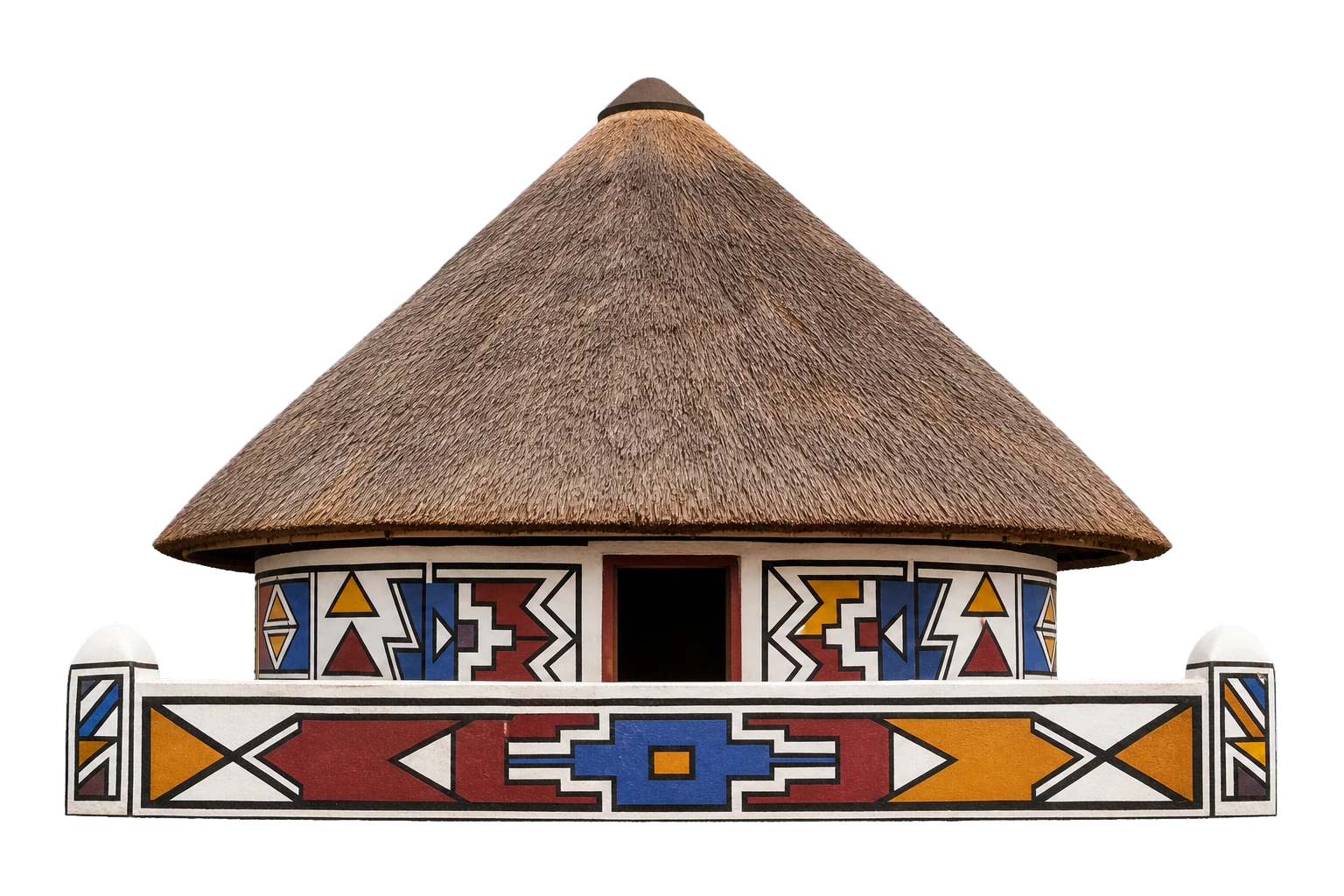
The source distinguishes Southern and Northern Ndebele in South Africa.
isiNdebele belongs to the Bantu language family and is spoken by amaNdebele communities in South Africa. The supplied history distinguishes its South African forms from languages with the same name in Zimbabwe and Botswana, reminding us that a shared label does not always describe one language community.
Gauteng, Mpumalanga, and Limpopo are central to its South African geography.
The name of the isiNdebele radio service means “star”.
01
A language and its people
isiNdebele is part of the broad Bantu family and is closely associated with amaNdebele communities. The SA-Venues account describes its sound as melodic and places much of its South African life in Gauteng, Mpumalanga, and Limpopo.
Language names can cross borders without describing identical languages. The Ndebele languages spoken in Zimbabwe and Botswana should not simply be treated as the same as South Africa’s isiNdebele.
02
More than one regional form
The source identifies Southern Ndebele and Northern Ndebele as the two principal South African branches. Geography, community history, and contact with neighbouring languages have all shaped the way these forms developed.
That internal variety is part of the language’s history rather than an exception to it. It makes careful naming especially important.
03
Pressure and separation
For long periods, isiNdebele received less institutional support than larger neighbouring languages. The supplied account records how some learners were directed toward isiZulu or Northern Sotho instead.
Apartheid-era boundaries also separated communities and deepened the language’s isolation. Its survival is therefore a story of people continuing to speak and transmit it despite political and educational pressure.
04
A star on the air
Broadcasting created another space in which isiNdebele could be heard. Radio Ndebele was later renamed Ikhwekhwezi, meaning “star”.
Radio helped keep pronunciation and vocabulary in public circulation. A language carried through the air could reach homes across distances imposed by geography and history.
05
Continuity is an active practice
A language remains alive through ordinary use: greetings, family conversation, teaching, radio, writing, music, and the invention of words for contemporary life.
isiNdebele’s story is not only about vulnerability. It is also about the speakers who continue to make the language present and useful from one generation to the next.
Research note
Read the research source
This chapter paraphrases the isiNdebele language and cultural research assembled for the project. Language, culture, architecture, and identity overlap; this page is a doorway into that history, not a claim that one roof or one account can represent every community or speaker.